Our Impact
When ME was identified by The Centre near a mine site, he was just 15 years old and already working in dangerous mining-related activities. Alongside friends, he worked without protective equipment, exposed to serious health and safety risks, and sold the ores he collected to local traders.
ME lives with his mother, sister, and two nephews. His father left the family in 2011, and his mother has been supporting the household alone through small-scale farming, earning around USD 50 per month. Like many children in vulnerable situations, ME had dropped out of school early—leaving primary school in Grade 3—and began working in the mines at the age of 12. By the time he was identified, he was three years behind in his education because his family could not afford school costs.
Through the Child Rights Action Hub in the DRC, a child-centred remediation plan was put in place with a clear long-term objective: to support ME in completing primary school and transitioning into vocational training to learn a trade. The 12-month programme, running from October 2024 to September 2025, included a medical examination, a monthly living allowance, support to complete 5th grade, three months of vocational training, and regular follow-up visits from a case manager.
At first, the transition back to school was not easy. Being older than his classmates and behind academically, ME was irregular in attendance and struggled with motivation. With consistent support from his case manager, however, his confidence and engagement steadily grew. He went on to complete primary school with an average score of 79.3%.
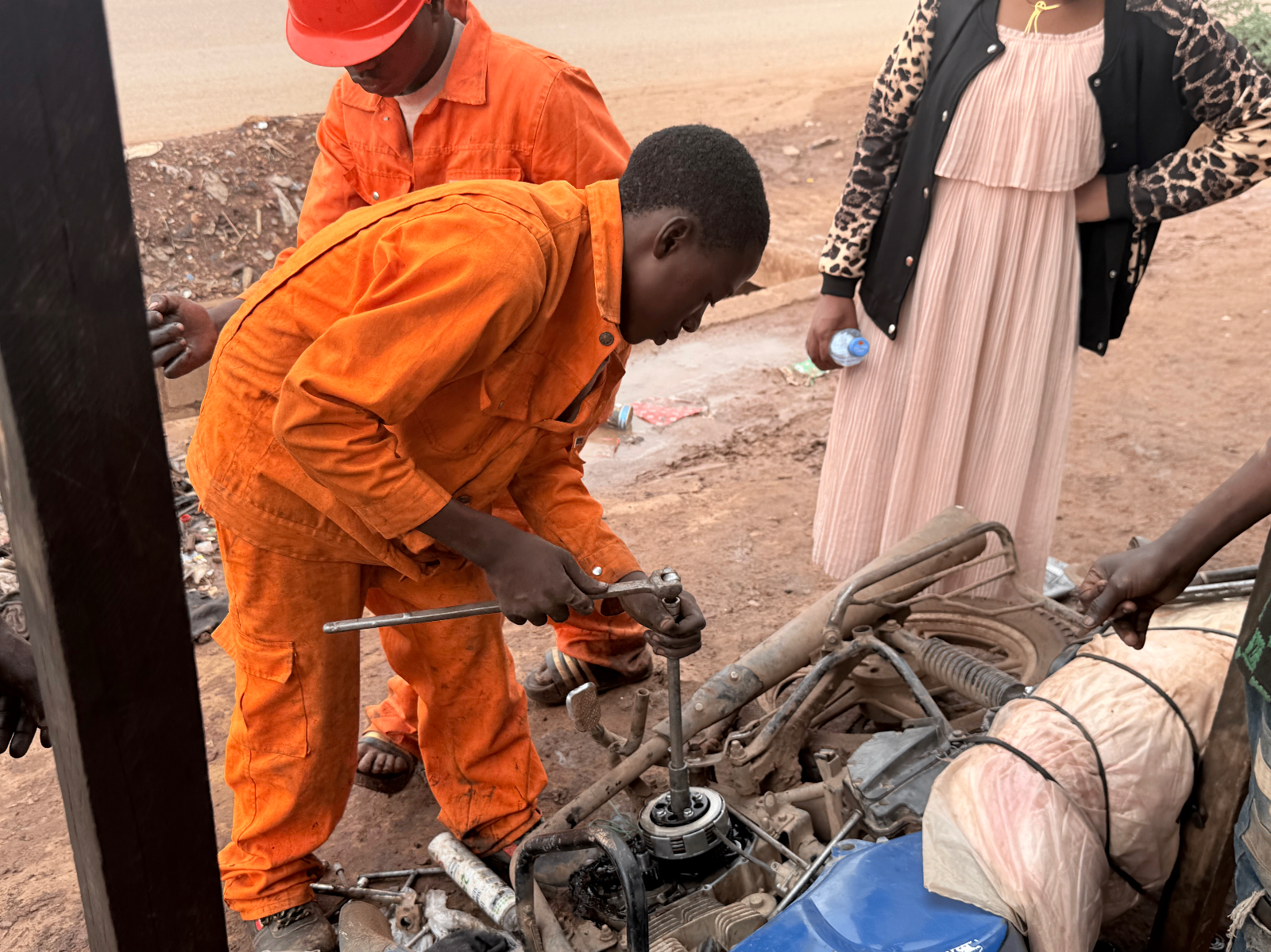 ME then entered vocational training in motorcycle mechanics, where he quickly stood out. Today, he is recognised as one of the brightest trainees, with strong technical skills. His trainer values his work and plans to keep him on at the garage as an assistant mechanic with a salary. Since entering the programme, ME has not returned to mining—and now proudly identifies himself as a mechanic.
His remediation programme officially ended in 2025, and he is currently in a post-remediation support phase, including additional vocational training and short-term family support to help ensure a stable transition.

“I am already proficient in motorcycle repair and can diagnose engine problems and carry out the necessary repairs,” ME says. “I competently handle the common breakdowns brought to our garage. However, I recognise that additional time would allow me to further develop my knowledge and refine my expertise.”

ME’s story shows what effective, child-centred remediation can achieve: not just removing a child from hazardous work, but supporting lasting change—in education, skills, dignity and future opportunities—always in the best interest of the child.

By using this website, you agree to our use of cookies. We use cookies to provide you with a great experience and to help our website run effectively.





