News

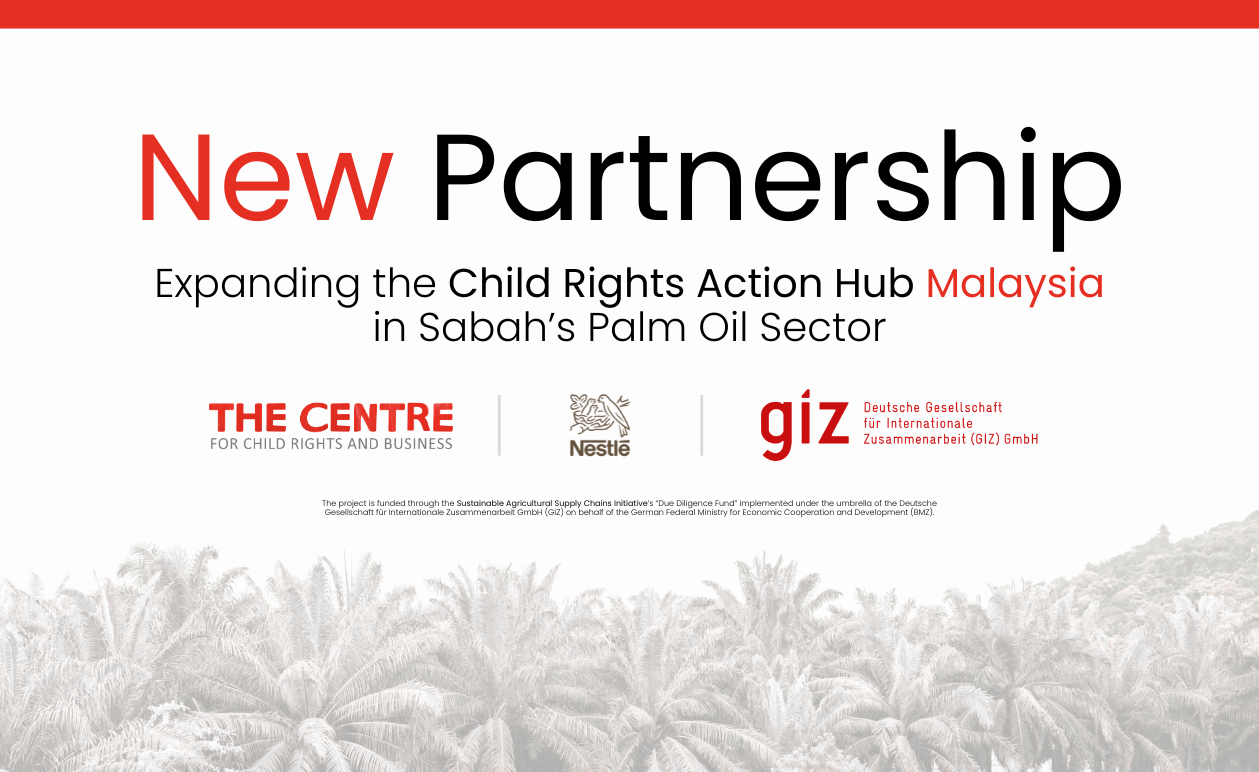
In the palm oil landscapes of Sabah, Malaysia, where plantations stretch across forested hills and coastal plains, the industry is both an economic engine and a lifeline for rural communities. The sector sustains thousands of livelihoods, from migrant workers to smallholder farmers whose harvests feed global supply chains. Yet behind this economic importance lies a more complex reality: poverty, documentation barriers, limited access to quality education and social services, and gaps in labour oversight can create conditions in which children remain vulnerable and lack protection.
A new partnership between Nestlé and The Centre aims to address these risks by strengthening the Child Rights Action Hub Malaysia in Sabah, a multistakeholder initiative that supports and protects children connected to the palm oil sector by bringing together businesses, civil society organisations and community actors. The project is funded through the Sustainable Agricultural Supply Chains Initiative’s (SASI) “Due Diligence Fund” implemented under the umbrella of GIZ on behalf of the German Federal Ministry for Economic Cooperation and Development (BMZ).
The initiative combines public funding, corporate engagement and on-the-ground implementation. The Centre will implement the expanded Child Rights Action Hub in Sabah, building on a network of 13 financial and non-financial supporters, including companies, government stakeholders and civil society organisations who contribute expertise, resources and local engagement.
Building systems that work on the ground
Child rights risks in agricultural supply chains often sit furthest from the spotlight, deep in upstream operations where traceability is weak and formal oversight is limited. In lower-tier plantations and informal settings of palm oil plantations, risks can be particularly pronounced. Families may struggle with unstable incomes or lack the documentation needed to access education and social services, factors that can indirectly push children into hazardous work.
The Child Rights Action Hub Malaysia was created to address these risks not through one-off interventions, but through systems that strengthen child rights.
The expanded initiative will focus on strengthening suppliers’ capacity to implement due diligence systems aligned with the standards of the OECD Due Diligence Guidance.
The programme is structured around four key workstreams that provide targeted support to producers and their business partners by:
Developing gender-sensitive child labour prevention and response plans
Strengthening local organisations and worker groups
Engaging supply chain actors through the “child rights change maker” approach
Ensuring appropriate protection and support for children at risk
Together, these efforts aim to address root causes, strengthen local systems and reduce operational and reputational risks.
Ultimately, the ambition of the Child Rights Action Hub in Sabah is to embed accountability mechanisms into supplier operations, strengthening community monitoring and linking remediation with social protection, and ultimately strengthening the protection of children’s rights across Sabah’s palm oil supply chains.
The project is funded through the Sustainable Agricultural Supply Chains Initiative’s “Due Diligence Fund” implemented under the umbrella of the Deutsche Gesellschaft für Internationale Zusammenarbeit GmbH (GIZ) on behalf of the German Federal Ministry for Economic Cooperation and Development (BMZ).

By using this website, you agree to our use of cookies. We use cookies to provide you with a great experience and to help our website run effectively.





